
Knee Conditions
Dr. Boyle treats the following knee conditions:
ACL Tears
The anterior cruciate ligament (ACL) is one of the primary stabilising ligaments of the knee and is commonly torn in sport - particularly rugby, netball, football, basketball, and skiing. ACL tears typically cause immediate pain, a "pop" in the knee, rapid swelling, and a feeling of instability when pivoting or changing direction.
In New Zealand, ACL tears sustained through an accident are frequently eligible for ACC cover, which can significantly reduce the cost of specialist assessment, MRI, surgery, and rehabilitation. Surgical reconstruction using a tendon graft (most commonly from the hamstring or patella tendon) is recommended for active patients wishing to return to sport. Return to competitive sport typically occurs at 9-12 months following a structured rehabilitation programme.
Meniscsus Tears
The menisci are two C-shaped cartilage pads that sit between the thigh bone (femur) and shin bone (tibia), acting as shock absorbers and stabilisers of the knee joint. Meniscus tears are among the most common knee injuries seen in active patients and can occur acutely from a twisting injury (often ACC-eligible) or develop gradually through degeneration in older patients.
Symptoms include pain along the inner or outer knee line, swelling, a clicking or catching sensation, and in some cases a locked knee. Treatment depends on the type, size, and location of the tear - some tears can be repaired arthroscopically (particularly in younger patients), while others are managed with partial removal (partial meniscectomy) to relieve symptoms.
Posterior Cruciate Ligament (PCL) Tears
The posterior cruciate ligament (PCL) is the strongest ligament in the knee and runs behind the ACL, connecting the back of the shin bone (tibia) to the thigh bone (femur). Its primary role is to prevent the tibia from sliding backwards relative to the femur. PCL tears typically result from a direct blow to the front of the bent knee - such as a dashboard injury in a motor vehicle accident or a fall onto a flexed knee in sport - and are ACC-eligible when caused by an acute injury.
Isolated PCL tears are often managed non-operatively with physiotherapy, as many patients regain good function without surgery. However, complete PCL tears - particularly those combined with other ligament injuries - can cause persistent instability and may benefit from surgical reconstruction. Dr Boyle will assess the degree of laxity and functional impact to determine the most appropriate treatment for each patient.
Medial Collateral Ligament (MCL) and Lateral Collateral Ligament (LCL) Tears
The collateral ligaments run along the inner (medial) and outer (lateral) sides of the knee, providing stability against sideways forces. MCL tears are among the most common knee ligament injuries and frequently occur in contact sport through a direct blow to the outside of the knee. LCL tears are less common and are typically caused by a varus (bow-legged) force to the knee. Both are ACC-eligible when caused by an acute injury.
Most isolated MCL tears heal successfully with non-operative treatment - bracing, physiotherapy, and a graduated return to sport. LCL tears and combined ligament injuries involving the posterolateral corner of the knee are more complex and often require surgical reconstruction to restore stability. Dr. Boyle will assess ligament integrity and any associated injuries to guide the appropriate management plan.
Patellofemoral Instability (Kneecap Dislocation)
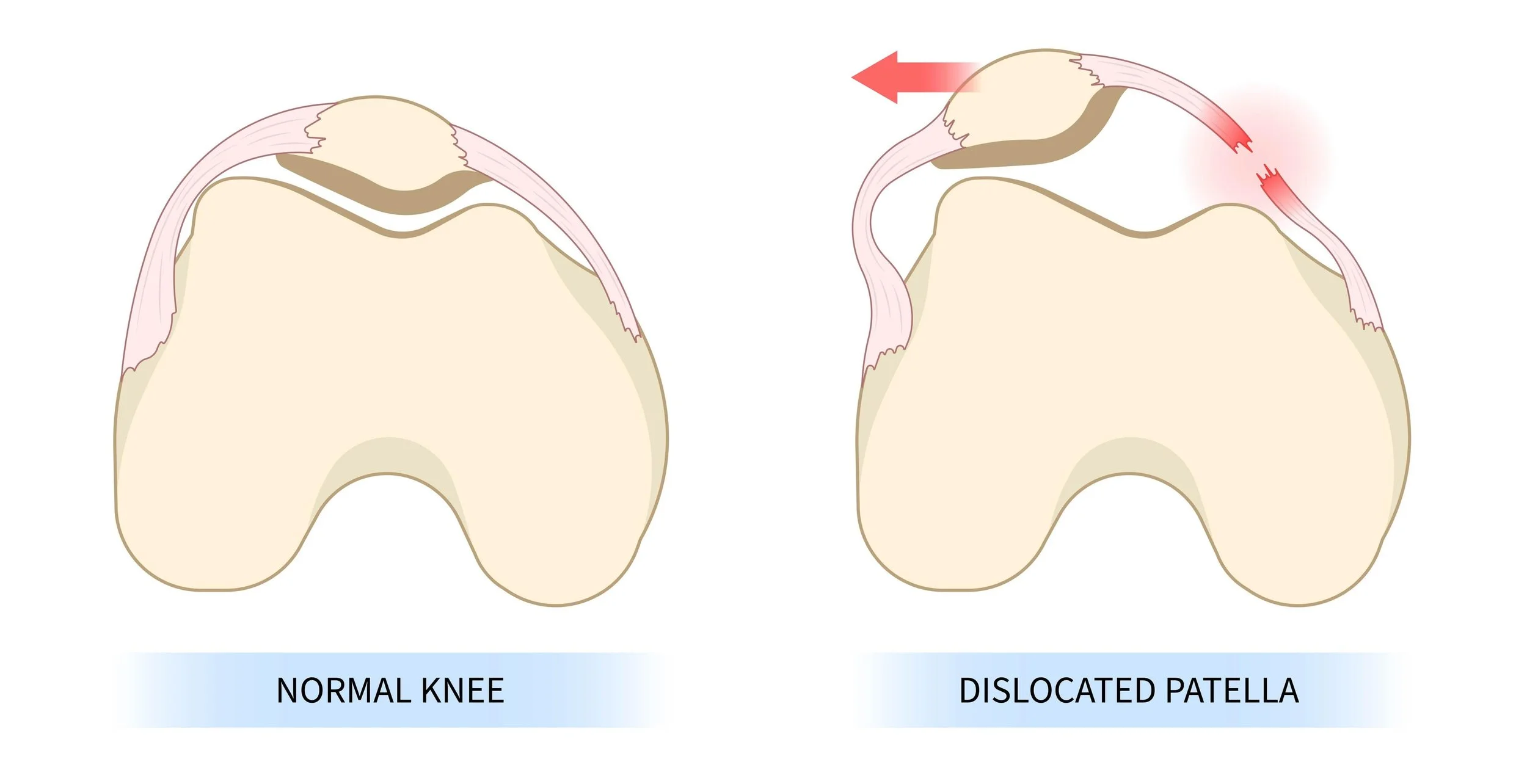
Patellofemoral instability occurs when the kneecap (patella) dislocates or partially dislocates (subluxates) from its groove at the front of the knee. It is particularly common in adolescent females and in those with certain structural factors that predispose the kneecap to instability. It can result from an acute sporting injury (ACC-eligible) or occur repeatedly without significant trauma.
Recurrent dislocation causes progressive damage to the cartilage on the back of the kneecap and the groove it runs in, increasing the risk of early arthritis if left untreated. Surgical stabilisation - tailored to the underlying cause - is recommended for patients with recurrent or functionally limiting instability.
Articular Cartilage Injury
Articular cartilage is the smooth, white tissue that covers the ends of the bones inside the knee joint. Cartilage injuries range from minor surface softening to full-thickness defects that expose the underlying bone, and can result from direct trauma, sporting injury, or occur alongside other injuries such as ACL tears.
Unlike most tissues in the body, articular cartilage has a very limited ability to heal spontaneously due to its poor blood supply. Early treatment is important to prevent the progression of cartilage damage to osteoarthritis. ACC cover may apply to cartilage injuries caused by an acute injury. Treatment options range from marrow stimulation techniques to cartilage transplantation procedures, depending on defect size and patient age.
Osteochondral Injury / Osteochondritis Dissecans (OCD)
An osteochondral injury involves damage to both the articular cartilage and the underlying bone of the knee joint. These injuries can result from acute trauma - such as a twisting injury or direct impact - or develop gradually through repetitive stress, a condition known as osteochondritis dissecans (OCD). OCD is most commonly seen in adolescents and young adults and typically affects the inner (medial) femoral condyle, though it can occur at other sites within the knee.
Symptoms include localised knee pain, swelling, and in cases where a fragment has become loose, locking or catching of the joint. Treatment depends on the patient's age, the size and stability of the lesion, and whether the fragment remains attached or has separated. Options range from activity modification and physiotherapy for stable lesions in skeletally immature patients, to arthroscopic fixation or cartilage restoration procedures for unstable or separated fragments. ACC cover may apply when the injury resulted from an acute accident.
To arrange a specialist assessment for any of the above conditions, ask your GP or physiotherapist to refer you to Dr. Matthew Boyle at Auckland Bone and Joint Surgery. Referrals can be sent via HealthLink EDI: drmboyle, or by calling 09 281 6733. Dr. Boyle consults at AUT Millennium, 17 Antares Place, Rosedale, North Shore Auckland.
Frequently Asked Questions
-
An ACL tear typically causes a loud pop at the moment of injury, rapid swelling, and a feeling of the knee giving way or being unstable, particularly when pivoting or changing direction. A meniscus tear more often causes pain along the joint line, clicking or catching, and swelling that can build up gradually rather than immediately. The two frequently occur together, especially in higher-energy injuries, so a clinical assessment and MRI are usually needed to confirm exactly which structures are affected.
-
Yes. ACL tears sustained through an accident - including sporting injuries such as those from rugby, netball, football, or skiing - are typically eligible for ACC cover in New Zealand. ACC can fund specialist assessment, MRI, ACL reconstruction surgery, and physiotherapy rehabilitation. To access ACC funding, your GP or physiotherapist needs to lodge an ACC claim at the time of injury or at your first assessment. If you have torn your ACL during sport or through a fall, ask your GP or physiotherapist about ACC eligibility
-
Return to competitive sport following ACL reconstruction typically takes 9 to 12 months with a structured rehabilitation programme, guided by milestones rather than time alone. See our dedicated ACL Reconstruction page for the full recovery timeline and graft options.
-
No. Many meniscus tears can be managed successfully without surgery, particularly in older patients with degenerative tears or in those with small, stable tears in a favourable location. Non-operative treatment includes physiotherapy, activity modification, and anti-inflammatory medication. Surgery is recommended when symptoms - such as pain, swelling, clicking, or locking - persist despite non-operative treatment, or when the tear is causing significant functional limitation. Some tears, particularly in younger patients, are suitable for arthroscopic repair rather than removal. Dr Boyle will assess the type, location, and size of your tear to recommend the most appropriate treatment.
-
The posterior cruciate ligament (PCL) sits behind the ACL and prevents the shin bone from sliding backward relative to the thigh bone. PCL tears are less common than ACL tears and usually result from a direct blow to the front of the shin, such as in a car accident or a hard fall onto a bent knee, rather than the pivoting injuries typical of ACL tears. Many isolated PCL tears can be managed without surgery, though more severe injuries or those involving multiple ligaments may require reconstruction.
-
Patellofemoral instability occurs when the kneecap (patella) repeatedly slips partially or fully out of its groove on the thigh bone, often first triggered by a twisting injury or direct blow. It's more common in adolescents and young adults, particularly females, and can become a recurring problem if the underlying anatomical factors aren't addressed. Treatment ranges from physiotherapy focused on strengthening the muscles that control the kneecap, through to surgical stabilisation in patients with recurrent dislocations or significant anatomical risk factors.
-
Yes, though it's less common than in older adults. Early or isolated osteoarthritis in younger patients is usually linked to a specific cause, such as a previous significant injury, an untreated cartilage defect, or an underlying alignment problem. Identifying and addressing the underlying cause, sometimes with joint-preserving surgery rather than joint replacement, is generally more successful in younger patients than treating the arthritis alone.