
Knee Procedures
Dr. Boyle performs the following knee procedures:
Anterior Cruciate Ligament (ACL) Reconstruction
ACL reconstruction is one of the most commonly performed orthopaedic procedures in New Zealand. The torn ACL cannot heal reliably on its own and is replaced with a tendon graft - most commonly taken from the hamstring or patella tendon - which is fixed into tunnels drilled in the femur and tibia. Over the following months, the graft gradually incorporates into the bone and matures into a functional ligament through a process called ligamentisation.
Surgery is recommended for active patients who wish to return to pivoting or contact sport, and for those with persistent instability affecting daily activities. Most acute ACL tears sustained through an accident are eligible for ACC cover. Return to competitive sport follows a structured rehabilitation programme and typically occurs at 9-12 months. Dr. Boyle will discuss graft choice and technique based on your individual circumstances.
Posterior Cruciate Ligament (PCL) Reconstruction
PCL reconstruction involves replacing the torn posterior cruciate ligament with a tendon graft to restore stability to the back of the knee. It is indicated for patients with complete PCL tears causing persistent posterior instability - particularly those with combined ligament injuries or high functional demands. The procedure uses similar principles to ACL reconstruction, with the graft fixed into bone tunnels under arthroscopic guidance. Recovery and rehabilitation follow a structured programme, with return to sport typically at 9-12 months. ACC cover applies when the injury resulted from an acute accident.
Medial Collateral Ligament (MCL) Repair or Reconstruction
Surgical treatment of the MCL is reserved for cases where the ligament has not healed adequately with non-operative management, or where the injury involves a complete avulsion of the ligament from its bony attachment. Acute MCL avulsions - where the ligament has pulled away from the bone - can be repaired directly. Chronic MCL insufficiency causing ongoing instability is managed with ligament reconstruction using a tendon graft. Surgery is often performed in conjunction with ACL reconstruction in patients with combined ligament injuries. ACC cover applies for acute injuries.
Lateral Collateral Ligament (LCL) Repair or Reconstruction
LCL and posterolateral corner injuries are among the most complex knee ligament problems and require careful surgical planning. Acute LCL tears with an identifiable avulsion from the bone can be repaired directly if surgery is performed promptly. Chronic or multi-ligament injuries involving the posterolateral corner typically require reconstruction using tendon graft tissue to recreate the key stabilising structures. These procedures are technically demanding and are best managed by a surgeon with experience in complex knee ligament reconstruction. ACC cover applies for acute injuries.
Meniscus Repair
Meniscus repair is an arthroscopic procedure in which a torn meniscus is sutured back together rather than removed, preserving the important shock-absorbing and stabilising function of the meniscal tissue. Not all tears are repairable - repair is most appropriate for tears in the outer (vascular) zone of the meniscus, which has a better blood supply and healing potential. Younger patients with acute tears and certain tear patterns are the best candidates. Meniscus repair requires a period of protected weight-bearing and a longer rehabilitation than meniscectomy, but preserves more of the native tissue and reduces the long-term risk of osteoarthritis. ACC cover applies for acute meniscal injuries.
Partial Meniscectomy
Partial meniscectomy is an arthroscopic procedure in which the damaged portion of a torn meniscus is removed, leaving as much healthy meniscal tissue as possible. It is the most appropriate treatment when the tear is in the inner (avascular) zone of the meniscus where healing is unlikely, or when the tear pattern is not suitable for repair. The procedure provides reliable and rapid relief of the pain, clicking, and locking symptoms caused by a torn meniscus. Recovery is faster than meniscus repair, with most patients returning to light activities within 2-3 weeks. ACC cover applies for acute meniscal injuries.
Patellofemoral Stabilisation Surgery
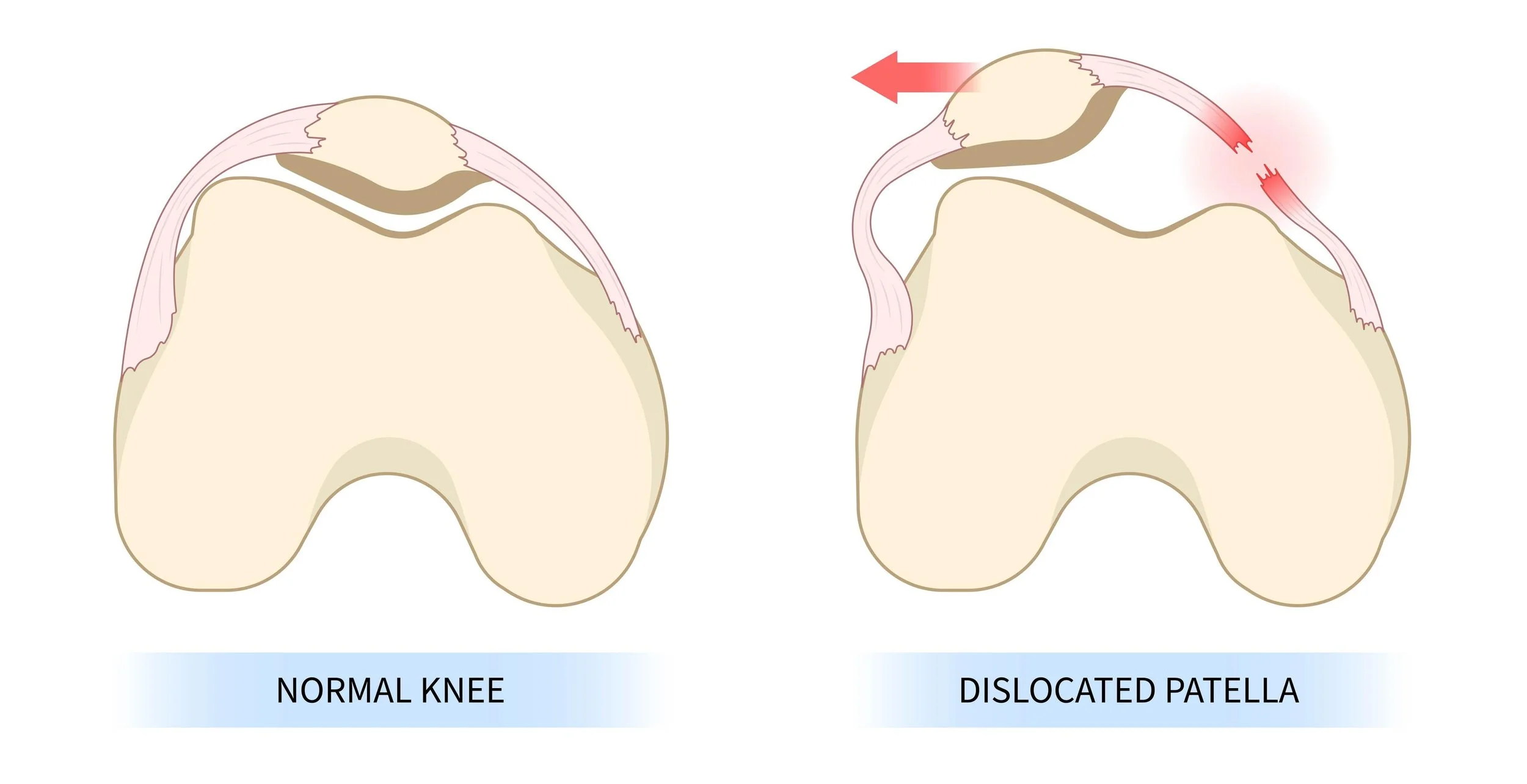
Patellofemoral stabilisation surgery addresses recurrent dislocation or subluxation of the kneecap (patella). The appropriate procedure depends on the underlying cause of instability - the two most commonly performed operations are MPFL reconstruction and tibial tubercle osteotomy, which may be performed independently or in combination.
Medial Patellofemoral Ligament (MPFL) Reconstruction
The medial patellofemoral ligament (MPFL) is the primary soft tissue restraint preventing the kneecap from dislocating outwards. It is torn in virtually all acute patellar dislocations. MPFL reconstruction involves replacing the damaged ligament with a tendon graft, which is fixed to the inner border of the kneecap and to the medial femoral condyle. It is the most commonly performed procedure for recurrent patellar instability and is highly effective in restoring stability in patients without significant bony malalignment. Return to sport typically occurs at 6-9 months. ACC cover often applies when instability follows an acute dislocation.
Tibial Tubercle Osteotomy (TTO)
A tibial tubercle osteotomy involves cutting and repositioning the bony prominence on the front of the shin (the tibial tubercle) where the patella tendon attaches. By moving this attachment point, the tracking of the kneecap within its groove can be corrected. It is recommended for patients with patellofemoral instability caused by malalignment of the extensor mechanism, or for those with patellofemoral pain and cartilage damage in whom offloading the affected area of the joint is beneficial. It is frequently performed in combination with MPFL reconstruction in patients with combined instability and malalignment.
Articular Cartilage Repair
Articular cartilage repair procedures aim to restore the smooth surface of the knee joint in patients with focal cartilage defects - areas where the cartilage has been damaged down to the underlying bone. Options include marrow stimulation techniques (such as microfracture), which stimulate the bone to produce a fibrocartilage repair tissue, and more advanced procedures such osteochondral autograft transfer (OATS), in which healthy cartilage tissue is used to fill the defect. The most appropriate technique depends on defect size, location, patient age, and activity demands. Early treatment of cartilage defects can prevent progression to osteoarthritis. ACC cover may apply when the injury resulted from an acute accident.
Osteochondral Injury Fixation
Osteochondral injury fixation is an arthroscopic or open procedure to stabilise a fragment of cartilage and underlying bone that has been displaced or partially detached from the joint surface. Where a viable fragment exists and can be reduced back into its original position, fixation using small headless screws or bioabsorbable pins allows the fragment to heal back to the underlying bone. Successful fixation preserves the native articular cartilage - a significantly better long-term outcome than removal of the fragment. The procedure is most effective when performed early, before the fragment and its bed have undergone irreversible changes. ACC cover applies when the injury resulted from an acute accident.
High Tibial Osteotomy (HTO) / Distal Femoral Osteotomy (DFO)
High tibial osteotomy and distal femoral osteotomy are procedures designed to shift the load-bearing axis of the knee away from a damaged compartment of the joint, relieving pain and slowing the progression of arthritis. It is most commonly performed in younger, active patients with single-compartment knee osteoarthritis and a secondary change in knee alignment, in whom joint replacement is not yet appropriate. A precise cut is made in the upper tibia or distal femur and the bone is repositioned to correct the alignment, then held with a plate and screws while it heals. High tibial osteotomy and distal femoral osteotomy can provide significant pain relief and functional improvement, extending the life of the native knee joint by a decade or more in well-selected patients.
To arrange a specialist assessment, ask your GP or physiotherapist to refer you to Dr. Matthew Boyle at Auckland Bone and Joint Surgery. Referrals can be sent via HealthLink EDI: drmboyle, or by calling 09 281 6733. Dr. Boyle consults at AUT Millennium, 17 Antares Place, Rosedale, North Shore Auckland.
Frequently Asked Questions
-
Most knee procedures performed by Dr Boyle can be done arthroscopically, including ACL reconstruction, meniscus repair and partial meniscectomy, articular cartilage procedures, loose body removal, and patellofemoral stabilisation. Arthroscopic surgery is performed through small portals rather than a large incision, resulting in less post-operative pain, faster recovery, and lower infection risk compared to open surgery. Some procedures - such as tibial tubercle osteotomy and high tibial osteotomy - require a small open incision but are still performed using minimally invasive techniques.
-
Meniscus repair stitches the torn cartilage back together, preserving as much of the meniscus as possible - this is generally preferred in younger patients and tears in a location with good healing potential, since it protects the knee from long-term wear. Partial meniscectomy trims away the damaged portion of the meniscus and is used when the tear pattern or tissue quality isn't suitable for repair. The choice depends on the type, location, and age of the tear, and is assessed during surgery as well as beforehand on MRI.
-
A high tibial osteotomy realigns the shin bone to shift weight-bearing load away from a damaged or arthritic part of the knee, most commonly the inner (medial) compartment. It's generally suited to younger, active patients with early arthritis isolated to one part of the knee who want to delay or avoid knee replacement, rather than patients with widespread arthritis across the whole joint.
-
Yes, in most cases. Knee arthroscopy - including meniscus surgery, cartilage procedures, and most ACL reconstructions - is typically performed as a day case, meaning you go home the same day under the care of a support person. More involved procedures, such as osteotomy, may occasionally require an overnight stay.
-
Many knee surgeries are eligible for ACC cover when the underlying injury resulted from an accident. This includes ACL reconstruction, meniscus repair, cartilage procedures, and ligament reconstruction following acute sporting or traumatic injuries. To access ACC funding, a claim must be lodged by your GP or physiotherapist at the time of injury or assessment. Dr Boyle's rooms can assist with ACC-related paperwork and pre-approval processes.
-
Return to sport timelines vary depending on the procedure. For arthroscopic meniscectomy, return to light sport is typically possible at 4-6 weeks. ACL reconstruction requires 9-12 months before return to competitive pivoting and contact sport. Patellofemoral stabilisation surgery (MPFL reconstruction) allows return to sport at approximately 6-9 months. Osteotomy procedures such as high tibial osteotomy require 9-12 months before return to sport. A structured physiotherapy programme and objective criteria - not just time elapsed - guide return to sport decisions.