

A fall onto an outstretched arm, a heavy tackle or a shoulder dislocation can tear the rotator cuff in a shoulder that was working normally the day before. These are called traumatic rotator cuff tears. They behave differently from the gradual, wear-and-tear tears that are common with age, and they are often best managed differently.
Because the shoulder is usually very painful after an injury, the weakness caused by a tear is easy to miss at first. This guide explains how traumatic tears are recognised, how they are treated, and why the timing of treatment matters.
What Is the Rotator Cuff?
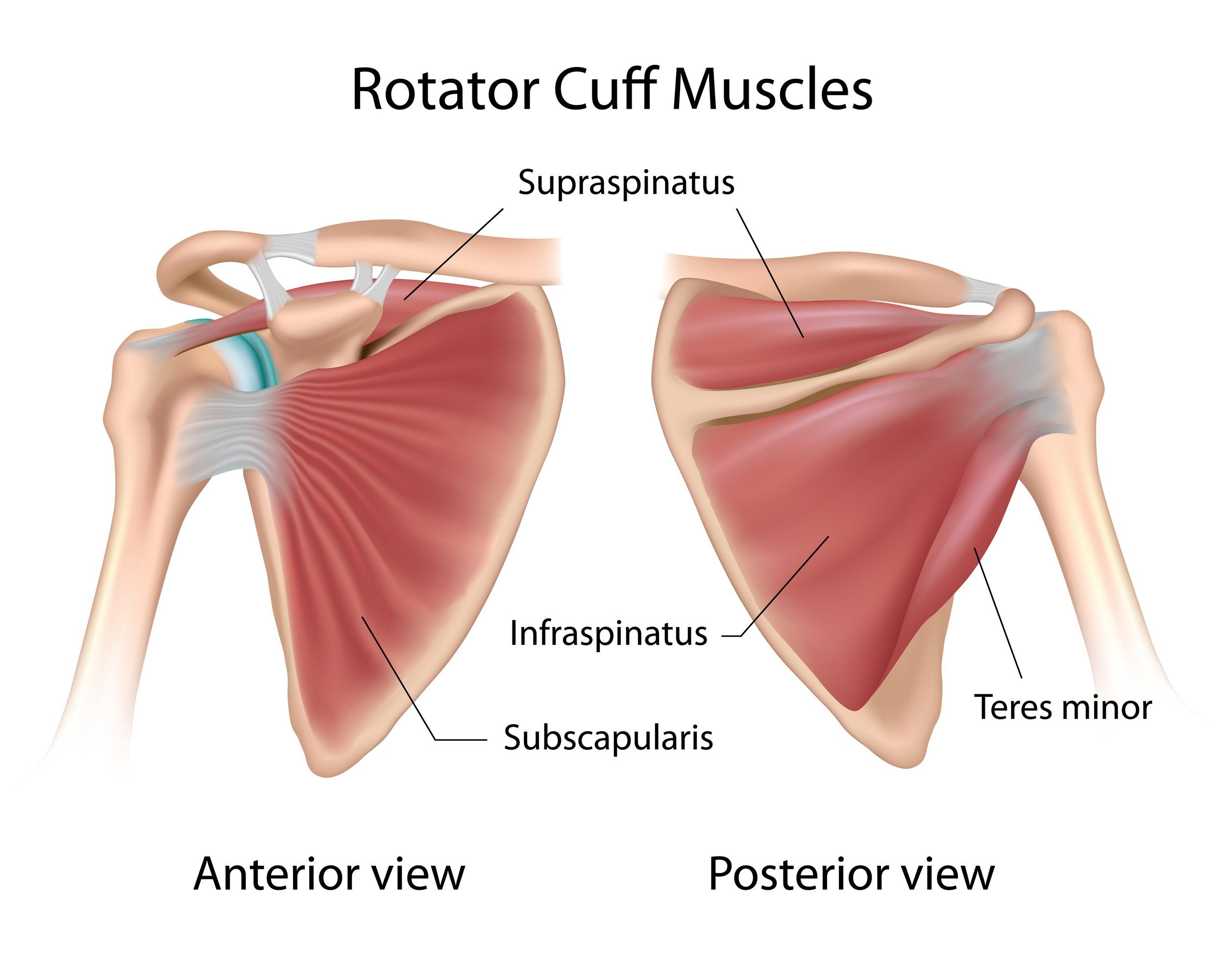
The rotator cuff is a group of four muscles and their tendons that surround the shoulder joint. They hold the ball of the upper arm centred in the socket and help you lift and rotate your arm. The tendon most often torn is the supraspinatus, at the top of the shoulder, which helps lift the arm out to the side.
Traumatic and Degenerative Tears
Most rotator cuff tears develop gradually. The tendon thins with age and can tear slowly over time, often without any injury, and many people with these tears have few or no symptoms. Degenerative tears are usually treated with physiotherapy first, with surgery considered if symptoms persist. This is covered in more detail in the guide Rotator Cuff Surgery: When to Operate.
A traumatic tear is different. It happens suddenly, during a specific injury, in a tendon that was previously working well. Common causes include:
A fall onto the shoulder or an outstretched arm
A tackle or collision in sport
A shoulder dislocation, particularly in people over 40
A sudden, forceful pull on the arm, such as grabbing a rail to stop a fall
In active people, a full-thickness traumatic tear (one that goes all the way through the tendon) often does not heal on its own, and surgical repair is commonly recommended.
Symptoms
Symptoms usually start immediately after the injury and can include:
Pain at the time of injury, often felt at the top and outer side of the shoulder
Weakness lifting the arm out to the side or overhead
Difficulty rotating the arm, for example reaching behind your back or out to the side
Pain at night, particularly when lying on the affected side
In larger tears, being unable to lift the arm at all
Why These Tears Can Be Missed
After a shoulder injury, pain often limits movement so much that it is hard to tell whether the shoulder is weak or simply sore. X-rays show bones rather than tendons, so they are usually normal. As a result, the injury may initially be thought of as a sprain or bruising.
Over the following weeks, the pain often settles, but the weakness does not. If your shoulder is still weak a few weeks after an injury, particularly when lifting your arm, it is worth asking your GP or physiotherapist whether further assessment is needed.
Diagnosis
Your GP or physiotherapist will examine your shoulder, testing the strength of each part of the rotator cuff. An X-ray is often taken to check for a fracture or dislocation.
A rotator cuff tear is confirmed with a scan. An ultrasound scan, which your GP or physiotherapist can arrange, is a common first test. An MRI scan, usually arranged by a specialist, shows the size of the tear, how far the tendon has pulled back, and the condition of the muscle, which helps with planning surgery.
Why Timing Matters
When a tendon tears completely, it can gradually pull back (retract) from the bone, and over months the muscle attached to it can begin to waste and be replaced by fat. These changes make a tear harder to repair and less likely to heal well. For this reason, traumatic tears are generally best assessed early, while repair is most straightforward.
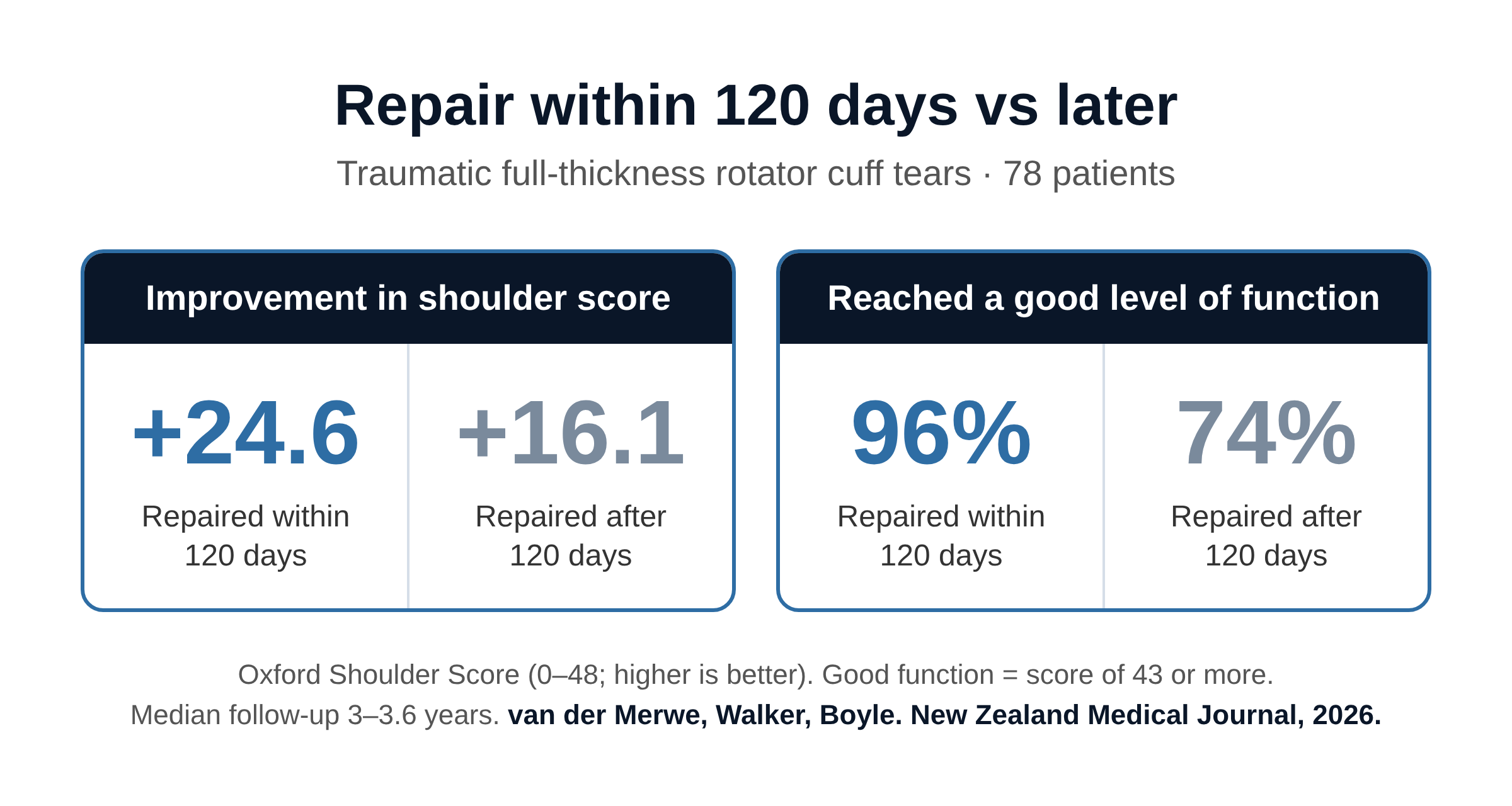
Our research, published in the New Zealand Medical Journal in 2026, looked at 78 patients who had arthroscopic repair of a traumatic full-thickness rotator cuff tear, followed for approximately three years. Patients whose tears were repaired within 120 days (about four months) of their injury improved more on the Oxford Shoulder Score, a standard measure of shoulder pain and function, than those repaired later. They were also more likely to reach a good level of shoulder function: 96% compared with 74%.
This was an observational study, so other factors may also have contributed, and many people repaired later still did well. But the findings support assessing a traumatic tear promptly rather than waiting to see whether it improves.
Treatment
Non-Surgical Treatment
Not every traumatic tear needs surgery. Partial-thickness tears, smaller tears in less active people, and tears in people who would prefer to avoid surgery can often be managed with physiotherapy, activity modification and pain relief. Your surgeon will discuss whether this is a reasonable option for you.
Arthroscopic Rotator Cuff Repair
For most full-thickness traumatic tears in active people, surgical repair is recommended. The operation is usually performed arthroscopically (keyhole surgery) through several small incisions. Small anchors are placed in the bone, and stitches attached to the anchors are used to reattach the torn tendon to where it belongs. Surgery is usually done under a general anaesthetic with a nerve block for pain relief, and most people go home the same day.
Recovery
The repair needs time to heal to the bone, so recovery is gradual and guided by your surgeon and physiotherapist. A typical recovery looks like this:
Sling: usually for about six weeks, removed for washing and gentle exercises
First six weeks: gentle movement exercises, with the arm moved for you or supported
Six to twelve weeks: you begin using the arm yourself and gradually regain movement
From about three months: strengthening exercises
Desk-based work: often within two to four weeks; heavier manual work, often four to six months
Full recovery: usually six to twelve months
Your own timeline will depend on the size of the tear, the quality of the tendon and your type of work or sport.
ACC and Traumatic Tears
Because traumatic tears are caused by an accident, they are usually covered by ACC. Your GP, physiotherapist or emergency department will normally lodge an ACC claim at your first visit after the injury.
If surgery is recommended, your surgeon will request approval from ACC, which for rotator cuff repairs can take several weeks. In people over about 40, scans often show some age-related change in the tendon alongside the injury, and ACC may sometimes decline surgery if it considers the tear to be mainly degenerative. Because of these steps, seeking assessment early helps keep the overall timeline as short as possible. For more on ACC, insurance and other funding options, see the guide Paying for Surgery.
When to Seek Assessment
See your GP or physiotherapist if, after a shoulder injury:
You still cannot lift your arm properly a few weeks later
Your shoulder feels weak when lifting or rotating, even as the pain settles
You have ongoing pain at night
You are over 40 and have dislocated your shoulder
Key Points
Traumatic rotator cuff tears happen suddenly, during an injury, in a shoulder that was previously working well.
Pain can mask weakness, and X-rays are usually normal, so these tears can be missed at first.
Persistent weakness a few weeks after a shoulder injury is worth assessing, usually with an ultrasound or MRI scan.
Full-thickness traumatic tears in active people are commonly treated with arthroscopic repair.
In our study, repair within about four months of injury was associated with greater improvement in shoulder function.
Traumatic tears are usually covered by ACC, but approval for surgery takes time, so early assessment helps.
This article is intended for general educational purposes and does not constitute medical advice. Every shoulder is different, and treatment should be based on an individual assessment. If you have injured your shoulder, please see your GP or physiotherapist in the first instance.