
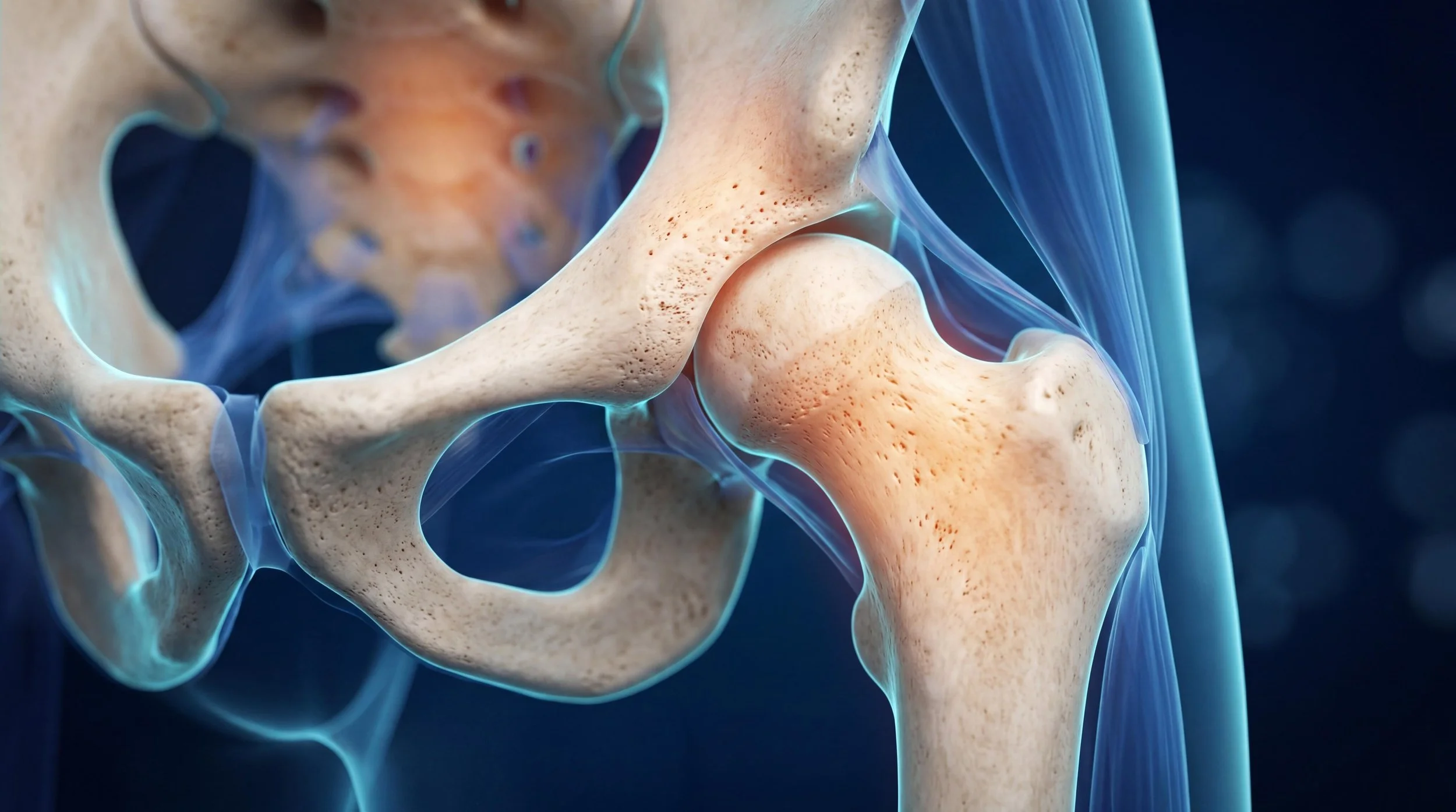
Periacetabular osteotomy - PAO - is the most effective surgical treatment available for young adults with hip dysplasia, and it is an operation that very few surgeons in New Zealand perform. For patients who have spent years searching for the source of their hip pain, understanding what PAO involves, who it is suitable for, and what recovery looks like is an important step in making an informed decision about their care.
For a video explanation of what hip dysplasia is and how it is diagnosed, see our Hip Dysplasia guide.
What Is PAO Surgery?
PAO is a joint-preserving hip surgery in which the acetabulum (the hip socket) is surgically cut free from the pelvis, repositioned to provide better coverage of the femoral head (the ball of the hip joint), and fixed in its new position with screws. By improving the coverage and orientation of the socket, PAO redistributes load more evenly across the cartilage surface, reduces pain, protects the labrum, and - in appropriately selected patients - significantly delays or prevents the progression to hip arthritis and the need for total hip replacement.
The procedure was developed in the 1980s and has been refined over decades of clinical experience. Long-term follow-up studies consistently show that PAO produces excellent results in appropriately selected patients, with many patients maintaining their native hip joint into their fifties and sixties.
Who Is a Candidate for PAO?
PAO is most appropriate for:
Patients with symptomatic hip dysplasia - groin pain, labral tears, or hip instability attributable to inadequate acetabular coverage
Patients with preserved or near-preserved joint cartilage - PAO is a joint-preserving operation, not a salvage procedure; if significant arthritis has already developed, the benefit is substantially reduced
Patients typically aged between 15 and 45 years, though the upper age limit depends on cartilage and bone quality and is assessed individually
Patients who have not obtained adequate symptom relief from non-operative management
PAO is not appropriate for patients with severe arthritis, patients with other significant hip deformity that requires different surgical correction, or patients whose symptoms are not primarily attributable to dysplasia.
A careful preoperative assessment - including detailed imaging and clinical examination - is essential to confirm that PAO is the right operation for each individual patient.
What Does PAO Surgery Involve?
PAO is performed under general anaesthetic and takes approximately 2-3 hours. Through an incision over the front of the hip, the surgeon makes precise cuts around the acetabulum to free it from the surrounding pelvis. The acetabulum is then carefully repositioned - typically redirected laterally, anteriorly, and slightly medially - to improve the coverage of the femoral head. Once optimal position is confirmed under intraoperative imaging, the repositioned socket is secured with three or four stainless steel screws.
In some cases, hip arthroscopy is performed in the same sitting to assess and treat any labral tears or cartilage damage within the joint.
What Does Recovery from PAO Look Like?
Recovery from PAO is a significant undertaking - it is a major pelvic reconstruction, and both patients and their families should be prepared for a meaningful period of rehabilitation.
Hospital stay: 4-5 days in hospital following surgery.
Weeks 1-6: Protected weight-bearing with crutches. The screws allow early mobilisation, but the healing bone requires protected loading during this phase. Physiotherapy begins in hospital and continues after discharge.
6-12 weeks: Gradual increase in weight-bearing as directed by the surgeon and physiotherapist. Walking without crutches typically begins during this phase.
Months 3-6: Progressive strengthening and return to everyday activities. Most patients return to desk work or study within 4-8 weeks. Driving is typically possible by 6-8 weeks (for an automatic vehicle) once off crutches and comfortable.
Months 6-12: Return to lower-impact sport and recreational activity.
12+ months: Return to more demanding physical activities and sport, guided by objective assessments.
The screws are not routinely removed but can be taken out as a minor procedure if they cause symptoms.
Why Seek Care at a Specialist Centre?
PAO is a technically demanding operation that requires specific training and ongoing case volume to maintain proficiency. Outcomes are strongly correlated with surgeon experience. Dr. Matthew Boyle trained in PAO surgery during his fellowship at Harvard University - one of the world’s leading hip preservation centres - and has performed PAO for patients from across New Zealand who travel to Auckland specifically for this subspecialty procedure.
If you have been told you have hip dysplasia, or if you have longstanding unexplained groin pain that has not been adequately investigated, we encourage you to seek an assessment. Learn more about hip dysplasia.
Getting a Referral for PAO in Auckland
Ask your GP for a referral and that the following imaging is arranged: AP pelvis x-ray and standing false-profile x-ray. Full imaging requirements are on the referral page. Contact the clinic directly or refer via HealthLink EDI: drmboyle.
This article is for general educational purposes only and does not constitute medical advice. Please consult your doctor or seek a specialist referral for personal medical advice.